Outdoors
The Loon Chicks, Nearly Grown, Have Stopped Needing Anyone
Three-quarter grown and diving on their own, the two Big Pelican juveniles have entered the awkward adolescence of waterfowl. The parents, one senses, are relieved.
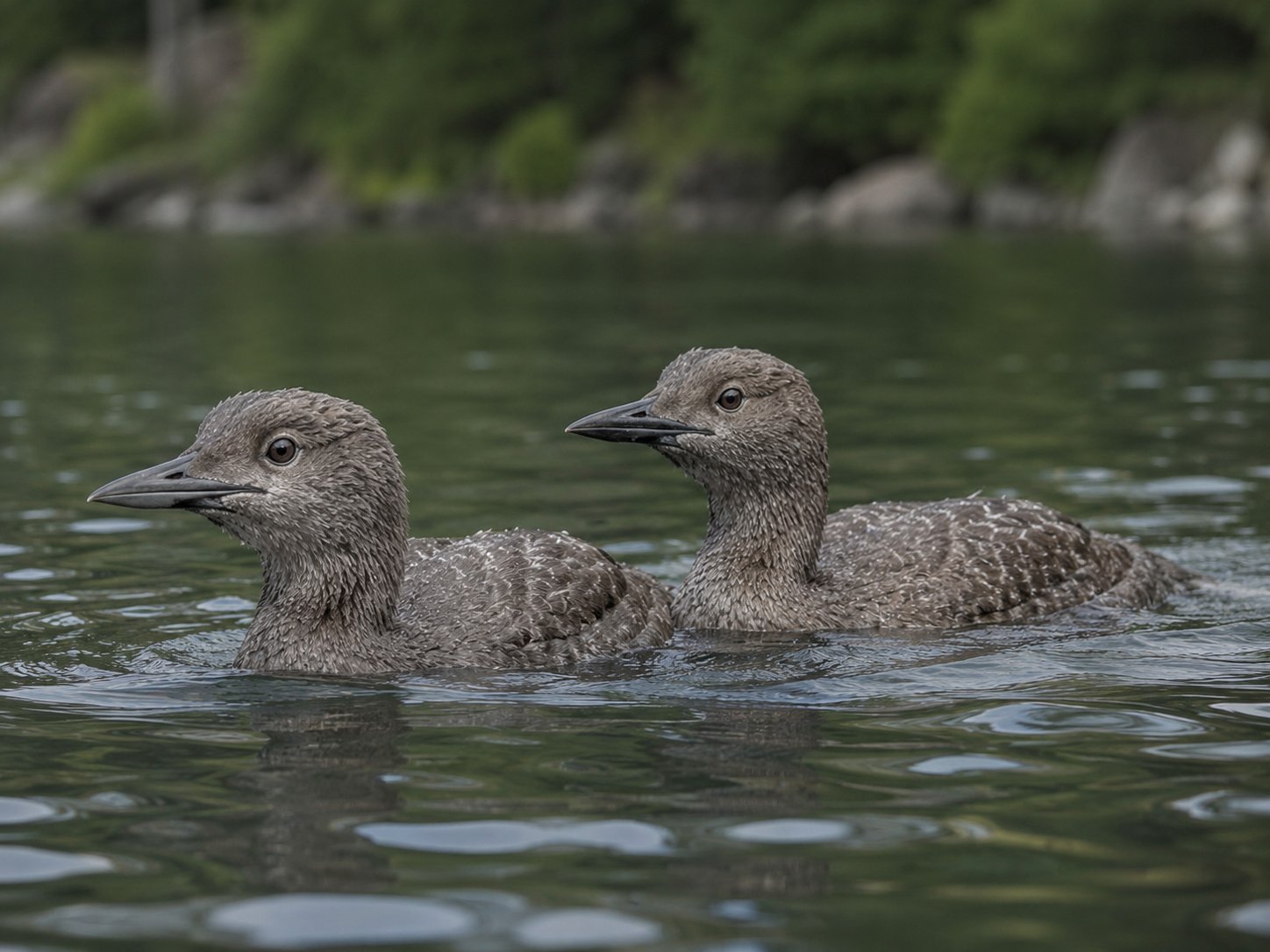
MISQUAH — The two loon chicks on Big Pelican, which rode their parent’s back in June and paddled anxiously alongside through the Fourth, have reached the stage every parent recognizes: they have stopped needing anyone. Three-quarters grown now, gray-brown and gangly, they dive on their own, feed themselves, and range farther from the adults each week, occasionally looking back to confirm the adults are still there, which the adults, wearily, are.
This is good news. A loon chick that makes it to this size has cleared the dangerous part of its first summer — the snapping turtles, the eagles, the wakes, the simple bad luck that takes so many in the first weeks. Two summers ago a snapping turtle took one of that year’s chicks off this same lake, a thing witnessed and not soon forgotten by those who witnessed it. These two came through. They will not all, in a given year. These two did.
The wider count is encouraging. The volunteer tally kept across the Chain this summer stands at fourteen adult loons and five chicks — up from last summer, and a number the Lions, who funded a nesting platform off the point this spring for something like forty dollars, are permitted to feel good about. Whether the platform deserves the credit is unprovable and therefore, in Lions tradition, assumed.
The chicks’ progress has been logged all summer by Greta Solberg, entering sixth grade, whose loon journal has become an unofficial record of record, and who certified both Big Pelican chicks through the Fourth in an entry this newspaper was permitted to see. It reads, in full: “Both still here. Bigger. One is braver.” This is better nature writing than most nature writing.
By late summer the juveniles will lose the last of their downy look, and by fall they will fly, and next spring they will not come back here — young loons winter on the ocean and spend years there before returning to breed, often to a different lake entirely. It is the way of them. For now they are here, nearly grown, ignoring their parents on the flat morning water, which is exactly what they are supposed to be doing.