The Klatch · From Eunice
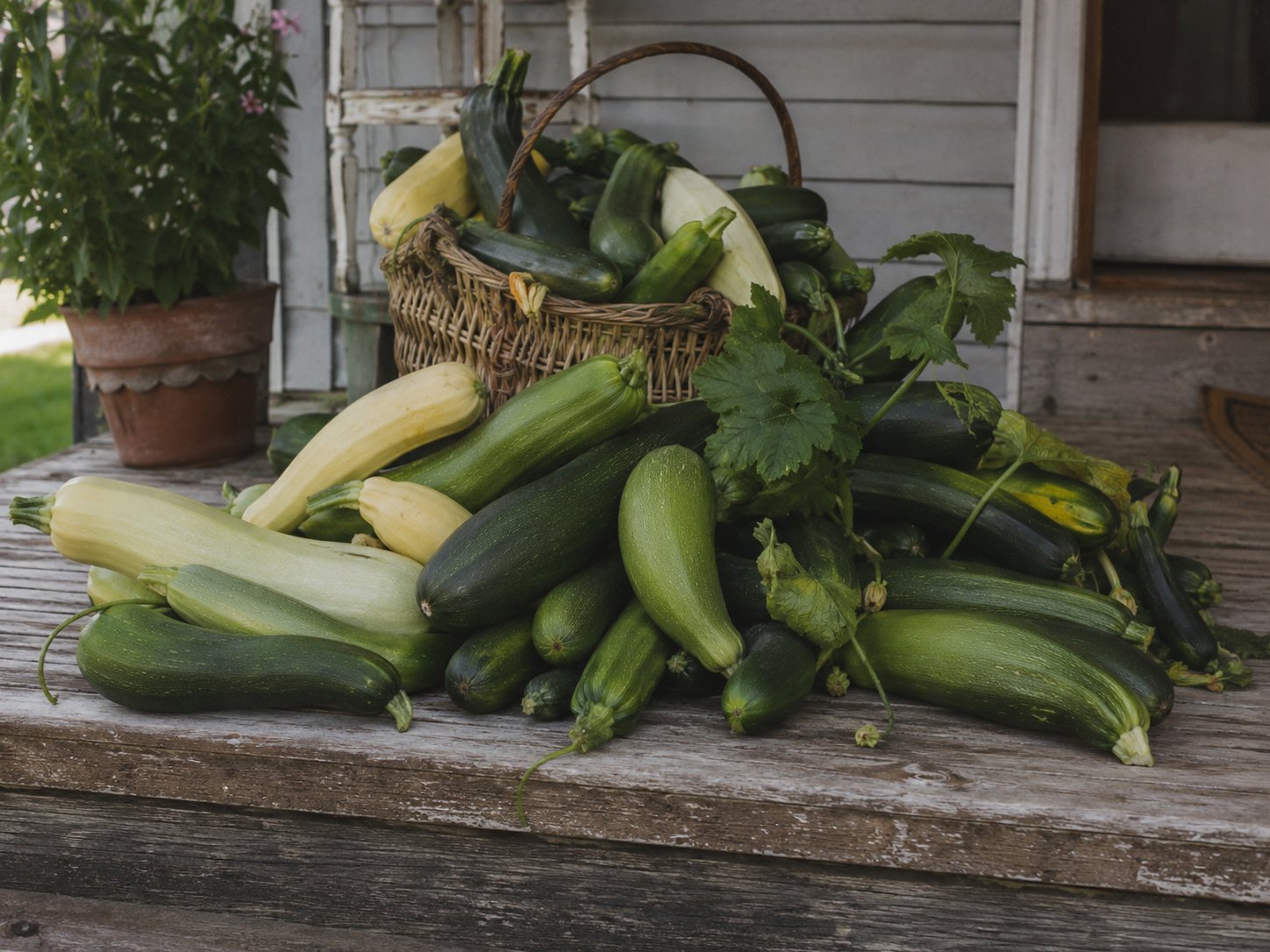
The Zucchini Cometh, and the Trombones Are Already Here
Eunice on the two sounds of mid-July — a beginner’s brass off the school, and the soft thud of surplus squash left on a porch after dark.
Read the full story →
“Where the coffee’s hot, the lakes are cold, and all the children are above average.” — Serving the Chain since 1897.
Tuesday, July 14, 2026 · July 14 Edition · column, recipe, history, and the stars
The Klatch · From Eunice
Eunice on the two sounds of mid-July — a beginner’s brass off the school, and the soft thud of surplus squash left on a porch after dark.
Read the full story →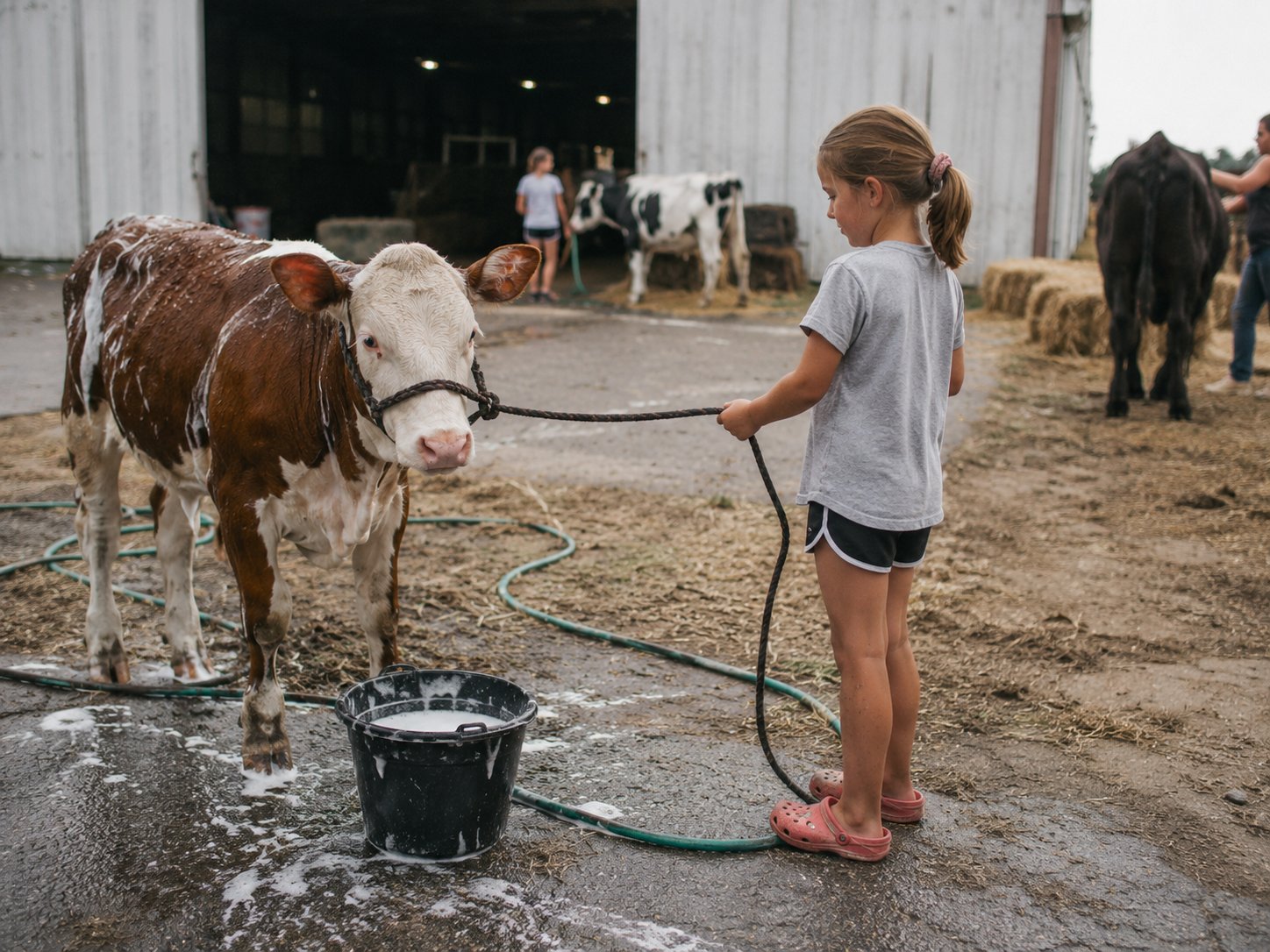
County Fair
With the fair three weeks out, the animals are being washed, the jams pre-judged by their makers, and the giant-pumpkin rivals, once again, not speaking.
Read the full story →Slice three or four cucumbers thin — the garden is drowning in them by now, so use the ones the neighbor left on your step. Salt them in a colander and let them sit half an hour to weep; press the water out with a clean towel, the way your grandmother did, and don’t skip it, or you’ll have soup.
For the dressing: half a cup of vinegar, a quarter cup of water, three tablespoons of sugar, a good shake of salt and pepper, dissolved together. Slice in a small onion, thin. Pour over the cucumbers and chill an hour at least. A little fresh dill if you have it; sour cream stirred in at the end if you want it richer, though then it will not keep, and the whole point of this one, in July, is that it keeps. It is the opposite of the potato salad in every way that matters, including survival.
Living · Fifty Years Ago
From the issue of the week of July 1976: the town marked the nation’s bicentennial with a parade down Main — the same length it runs now, the only length it has ever run — led by a fire truck freshly washed for the occasion and a color guard of veterans, three of whom, the paper noted, “had walked that same street in uniform for real, and said little about it.” The Norskie Ramblers played the pavilion dance, admission one dollar, and the column recorded that the fireworks over Big Pelican were “the best in memory, which is what we say every year, and mean every year.” A separate item reported, fifty years before it would be tabled for the eleventh time, that “talk has again turned to a stop sign at Birch and Second.” Some things take. Some things, it seems, simply wait.
Living · Stars Over the Chain
As read by Sigrid Pelto, from the end of her dock on Loon Lake — usually close.
The Sun has come home to Leo just as the smoke clears from the fireworks, and the season turns from water to fire, from the lake to the long warm middle of the summer. The Moon wanes after its bright holiday turn, kind now to quiet work and second thoughts. Mercury favors newcomers — a banker, a brewery, a moose — and Venus, as ever, smiles on the cradle: the sign will read two higher by the time Earl gets to it.
The parade has a grand marshal now, and rules, and a lineup time. You may grieve the old free-for-all; you may also show up at 11:30. Do both. Order is not the enemy of joy, only its chaperone.
A brewery rises where the creamery stood, in a room your paper once measured for a press. Nothing here is ever only one thing. Hold what lasts; let the building have its fourth life.
A moose came to Little Pelican and left without explaining himself, which you might study. Not every arrival owes you a reason. Let the strange visitor be strange, and be glad you saw it.
Two babies, no funerals, the sign going up by two. Your season ends on the kindest arithmetic the town has had in a while. Sit in it. You, of all the signs, know how to feel a thing fully.
The Sun comes home to you with the fireworks barely cold. Shine — but the parade that worked best this week was the one that slowed down. Lead at an idle. They will follow further than you think.
The Peterson roof gets fixed before it fails, which is the whole of your gospel in one barn. Mend the thing now, while mending is still cheaper than mourning. Someone you love has a roof going too.
A new neighbor arrives meaning to stay and stand out at once. Make room. Balance this week is not splitting the difference; it is widening the table until the newcomer fits, and then forgetting she ever didn’t.
The deep walleye bite early and sulk by ten, which is also you, and you know it. Take what the depths give in the first cool hour. Do not wait for the lake, or the day, to come around to you.
The fair’s entry books are out; the pumpkins are already at war. Aim at something this month, even something foolish and enormous. The point was never the pumpkin. The point was tending a thing all summer.
A bank changes hands; a barn keeps its roof; a brewery is nearly built. The town is putting things up and keeping things standing. Build, or mend — either counts. Idle hands fix no roofs.
No obituaries again, and you, who prefers a fact to a feeling, will feel the blank page anyway. Let yourself. Some weeks the kindest news is the news that isn’t there. Don’t analyze the relief. Just take it.
The official boats ran at noon; the dreamers’ boats still drift out at dusk, ungoverned, just because. Be a dusk boat this week. The schedule will hold the daylight. The evening, as ever, is yours.
A number withheld. Vern Dahlquist marks a birthday Thursday, the age unprinted at his request and known to all. Cake at ten at the Daybreak; Eunice asks that everyone act surprised, and reports that he has asked her to ask, which rather settles it.
Sixty-five years. Mildred Haugen’s sixty-five years on Second Avenue continue, and the close call of 1979 continues to stand alone, as she would like noted, again.
Twelve, times three. The Vekved triplets are twelve this month — consecutively, eleven minutes apart, a fact each sister deploys as the situation requires.
A few weeks old. The two June babies, on whose account the population sign reads 3,916, are reported thriving, sleeping poorly, and entirely worth it.