
Schools
Twenty-Four Books for Nyberg’s Twenty-Fourth September
Barb Nyberg has laid a different picture book on every desk in Room 6 before the first day of school since 2002. She has never explained the choices, and she is not going to start now.
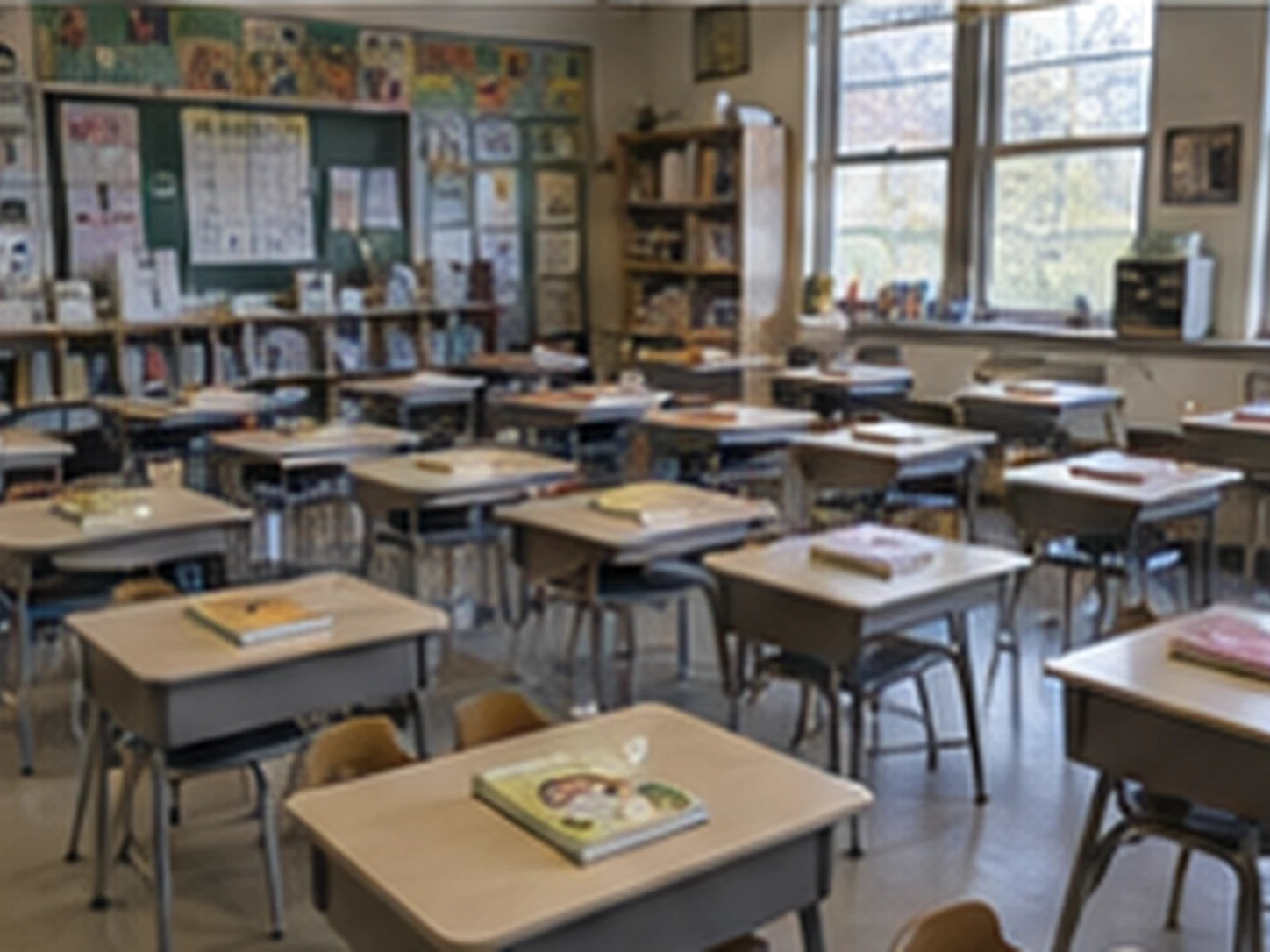
MISQUAH — There are twenty-four desks in Room 6 this year and there were twenty-four books on them Wednesday morning before a single third-grader came through the door, one to a desk, spines squared to the edge, none of them the same title.
Barb Nyberg has done this every September since 2002. She chooses the books in August, from the class list, based on what she knows about each family — and in a district this size, after twenty-four years, what she knows about each family is considerable and occasionally includes having taught the parent.
She does not explain the choices. Not to the children, not to the parents, not, after repeated asking over several years, to this newspaper.
“If I tell a child why I picked it, then it is a message from me,” she said. “If I do not, it is a book on a desk. One of those is more interesting to an eight-year-old than the other.” Asked whether any child has ever asked her directly, she said yes, four or five over the years, and that she tells them she picked it because it was on the shelf, which she describes as “true as far as it goes.”
Not all of them get read. She estimates that in a normal year about a third of the class reads its book inside a week, another third gets to it eventually, and the rest never open it, and that this has held steady across two decades and does not correlate with anything she can identify, including reading level.
What she will say is that she has never once put the same book on the same family’s desk twice, which means she is running a twenty-four-year index in her head and in a spiral notebook in the bottom drawer, and that the notebook is the only part of the operation she would be sorry to lose.
The twenty-four books went out Wednesday. By Friday, by her count, nine had gone home in backpacks without being mentioned to her, which is what she considers the system working. One came back Monday with a note from a mother explaining that she had read it first. Mrs. Nyberg has kept the note.
Room 6 is unchanged otherwise: the bulletin board by the door is filled now, the name cards are laminated, and the reading corner has been rearranged once since the first day, which she says was information and not indecision.
The practice began, as she tells it, by accident. In 2002, her first September, she had a class of nineteen and a shelf of picture books that the retiring teacher had left behind and that she did not know what to do with. She put them on the desks to get them off the shelf. Three children took them home the first week and one of them, a boy she still names when asked, brought it back and asked if there were others like it.
She has never had a year where she could not fill the desks. She buys at rummage sales in June, keeps a box in her garage, and has twice driven to Duluth for a specific title for a specific child, which she mentions only when asked directly and immediately downplays.
Asked what happens when she gets one wrong — a book a child plainly has no use for — she said it happens every year, three or four times, and that she has learned to leave it alone. “If I swap it out, I have told that child I was watching to see if they read it,” she said. “Then the whole thing is a test. It is not a test. Some years a book sits on a desk until June and goes back in the box and that is a perfectly good outcome.”