Business
Brewery Nears Opening in the Old Creamery — Where the Pilot’s Press Almost Stood
Annika and Jonas Holt will pour the Chain’s first pints in the building that once made the town’s butter. The Pilot once eyed the same back hall for its press, and never quite moved in.
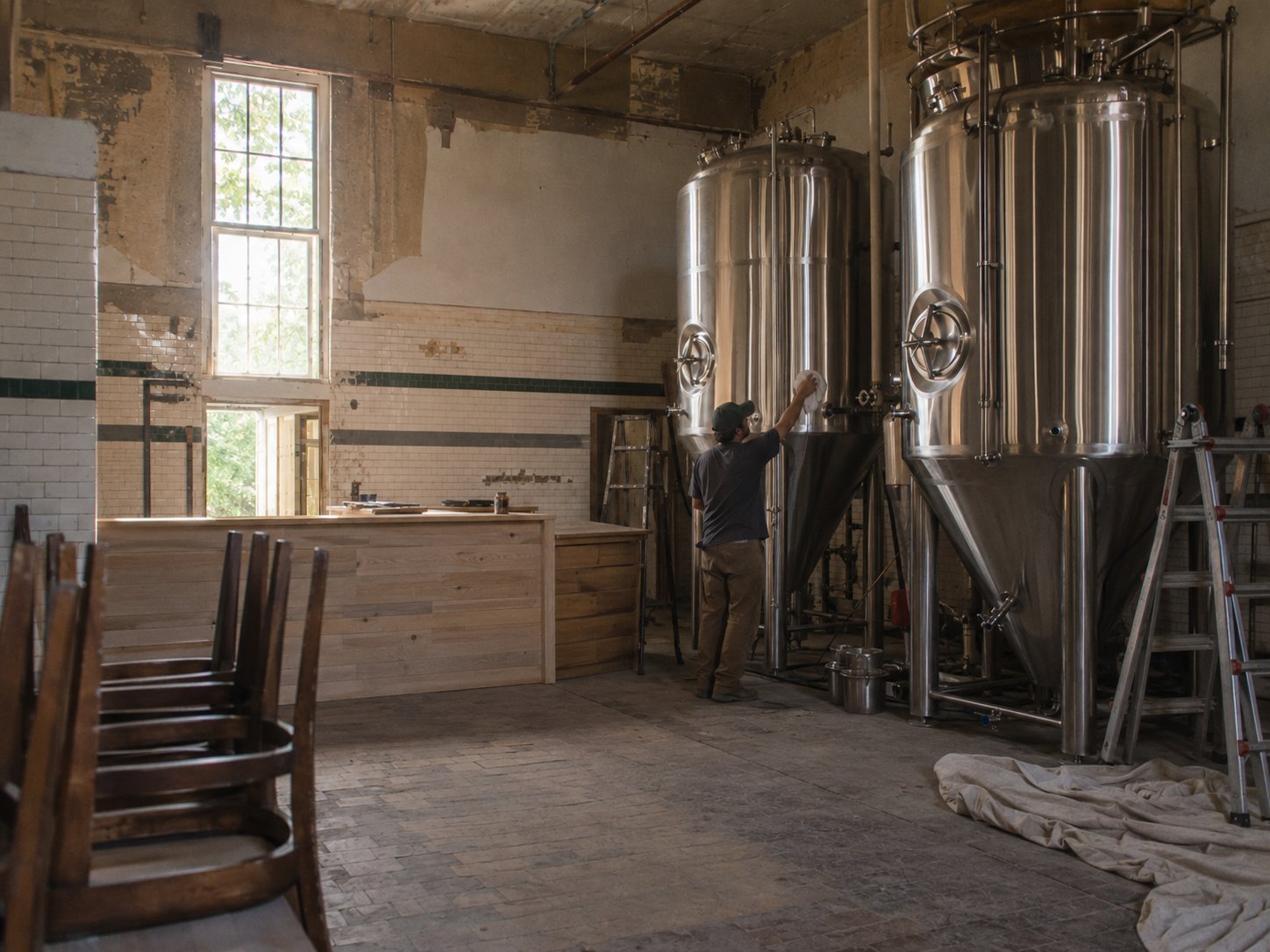
MISQUAH — The Chain’s first brewery is weeks from opening in the old Co-op creamery on the edge of downtown, and the building — empty, more or less, since the Co-op creamery closed in 1987 (the other creamery, the older one on Birch Street, has held this newspaper since 1897 and is not going anywhere) — is filling again with the sounds of a working enterprise, which the town finds it has missed more than it knew.
Annika and Jonas Holt expect to open their taproom in August, pending the license application before the council Tuesday (see News). Annika is Misquah-born and lately returned; Jonas has brewed professionally for twelve years; and together they have spent the better part of a year coaxing the cavernous old creamery — built to make butter, with the thick walls and cool concrete floors the work required — toward its new purpose. “The bones are perfect for beer,” Jonas said. “Cold, solid, built to be hosed down. They made butter in here for eighty years. We’re changing it less than you’d think. We’re mostly just changing what it keeps cold.”
The creamery’s afterlife has been long and mostly idle. After it closed, the building was carved up — some office use down front, the great back hall left to storage and the occasional rummage sale — and it has stood, for the better part of four decades, as one of those buildings a town walks past without quite seeing: too solid to lose, too large to easily use.
It came nearer a second life than most people remember. Sometime in the 1990s, this very newspaper looked hard at moving its press into that back hall — at finally printing the Pilot-Independent in Misquah, in a space big enough for the larger press the job had outgrown, instead of trucking the pages to Pinedale and back, as it does to this day. The plan got as far as measurements. Earl, the paper’s pressman, took them himself, and has them still, in a drawer, and will produce them, entirely unbidden, for anyone who so much as mentions the building. The press never moved. The room waited. Now it will hold tanks.
Annika has made her peace with the building’s layered ghosts — the butter, the long storage years, the newspaper that almost was. “People keep telling me what this room used to be, or almost was,” she said. “I like it. A town this size, every building’s got three or four lives in it. We’re just the next one. Beer where the butter was, and where the paper’s press almost stood — that’s a good story to open with. We’ll have it printed on the wall. In Pinedale, probably, like everything else.”
The taproom will seat about sixty, pour beer brewed on site, and offer, Annika promised, “a place to sit down that isn’t a bar stool or a church basement, which this town has gone forty years without.” An opening date will be announced once the license clears and the last of the equipment is, in Jonas’s words, “persuaded to fully cooperate.”