
The Hagen Pasture
Full House, Forty Speakers, No Vote: Pasture Question Goes Under Advisement
The biggest hearing in a generation ran two and a half hours, required more chairs than the city owns, and ended exactly as promised — with the planning board taking the eighteen lots home to think about. A decision is expected in late August.
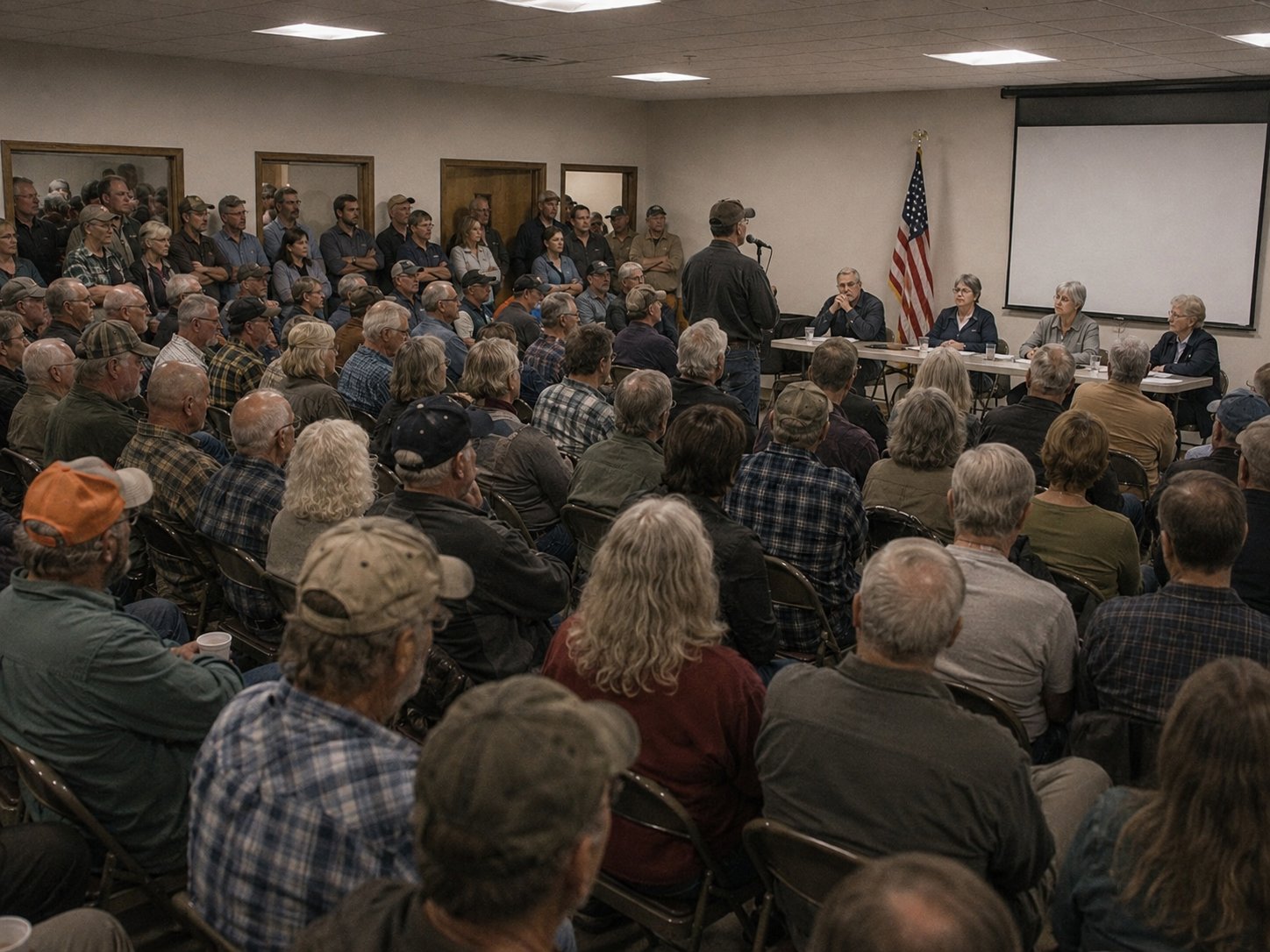
MISQUAH — The planning board heard the town out Tuesday night, and the town, it turns out, had a good deal to say. The public hearing on the proposed eighteen-lot development on the old Hagen pasture ran two and a half hours, drew the largest crowd the city hall has held since anyone started counting, and ended precisely the way the board said it would: with no vote, no decision, and the whole forty-one acres taken under advisement.
The room filled by a quarter to seven. The extra chairs set out along the wall — photographed by this newspaper the week prior, in what now looks like understatement — were gone by ten of, and Clerk Donna Skoglund was seen carrying in the folding chairs from the fire hall, which is technically a loan and will technically be returned. Late arrivals stood three deep at the back, and the coffee urn, pressed beyond its design capacity, was retired empty before the first speaker finished.
Forty people spoke. The count is exact, because Mrs. Skoglund kept the sign-up sheet, and this newspaper has learned not to round numbers in this town. They spoke for the houses, and against them, and — in what became the evening’s honest pattern — frequently both, sometimes within the same three minutes. A man who described the pasture view as “the reason I never left” closed by saying his son commutes forty minutes from Two Rivers because there is nothing here to buy. A woman who spoke in favor of the lots asked, on her way back to her seat, whether the fence line at least might be kept. Nobody in the room appeared to find any of this contradictory, because nobody in this town is.
Alderman Pete Hagen, recused since spring, attended anyway — seated in the back row as a private citizen, hands folded, saying nothing all evening. Asked afterward why he came, he said, “It was my uncle’s land. I figured it deserved somebody from the family sitting quietly while the town decides what it becomes.” It was, several attendees agreed, the best speech of the night, and he never took the microphone.
The board asked questions — about drainage, about lot widths, about whether the developer would consider seventeen lots, or sixteen, or a buffer along the fence line — and then did what boards do when they mean it: took the matter under advisement, genuinely. Chairman Ross Vig announced a special meeting for late August, date to be posted at the clerk’s window, at which the board expects to issue its recommendation to the council. “We heard you,” Vig said, closing the hearing at 9:34. “All of you. Including the ones who heard themselves say two things.”
And then the part this newspaper had asked for, and got. Wednesday morning at the Daybreak, at the window table, two men who had opposed each other at the microphone eleven hours earlier were observed sharing a pot of coffee and arguing — witnesses confirm — about walleye. The town survived its biggest night in years the way it survives everything: by showing up the next morning, at the usual table, on speaking terms. The pasture’s future is now the board’s problem until late August. The town’s future, on the evidence of Wednesday, appears secure.