The Grouse Opener
Grouse Opener Finds Birds Behind a Lot of Leaves
Hunters reported plenty of noise and fewer clean looks Saturday as the woods went into the season still mostly green. The birds are there. So is everything else.
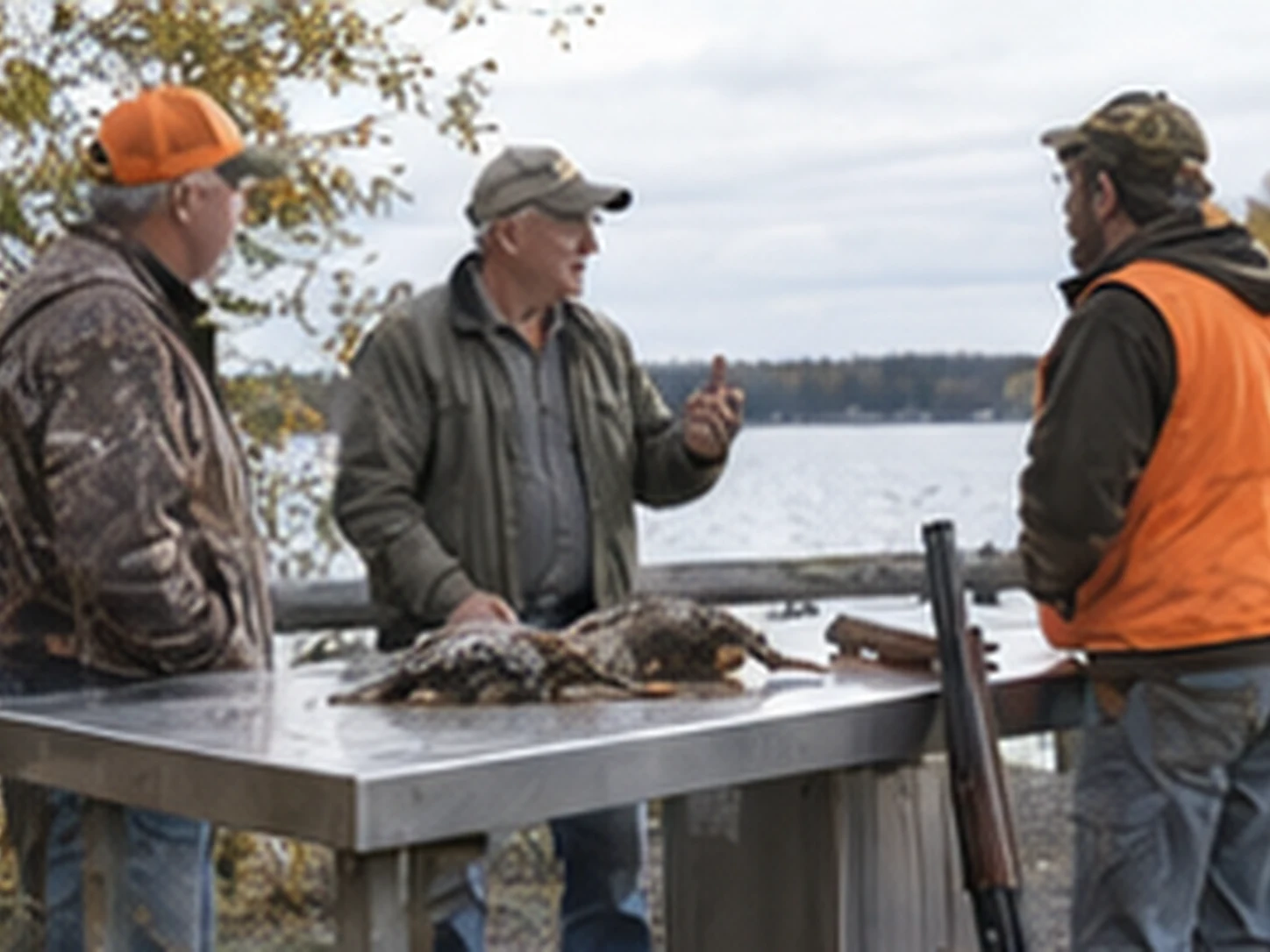
MISQUAH — The grouse season opened Saturday at daylight and the woods were, by the nearly unanimous report of people who spent the weekend in them, full of birds nobody could see.
Leaf cover is the whole story. A wet June and a dry warm September have combined to leave the popple and the hazel still carrying most of what they carried in August, and a bird that flushes at fifteen yards into that is a sound and not a target. “I heard eleven and I shot at three,” said one hunter at the cleaning station Saturday afternoon, in a tone that had already made its peace. “It was a good day.”
That is the correct arithmetic for an opener in a year like this one, and it is worth saying plainly for anyone new to it: hearing a bird go out is not a failure. The birds are here. Brood reports through August were the best in three years along the Loon Ridge and County 6 trail systems, and what the weekend showed was cover, not scarcity.
What worked was walking slowly. What did not work was covering ground. The hunters who came in with birds Saturday were, without exception, the ones who had gone half as far and stopped twice as often — a distinction this newspaper reports every opener and which is ignored every opener by people in a hurry.
Dogs made the difference where there were dogs. Three parties out of the eleven this newspaper spoke with had one; all three finished the weekend with birds; and the honest reason is that a dog holds a point long enough for a person to get his feet under him in cover where a walked-up bird is gone before the gun is up.
Safety, briefly, because it matters and because it is dull: no hunting injuries were reported in the immediate Misquah area through Monday. Blaze orange is not required for grouse in Minnesota and roughly half the people out there were wearing it anyway, which the Sheriff’s northern substation notes with approval and does not intend to make a campaign of.
The Daybreak’s grouse sheet, which somebody taped to the front window the Tuesday after the fair sheet came down, filled its first page by Saturday afternoon. Pat Reinholt put up a second sheet Sunday morning. It is not a harvest count, it is not official, and this newspaper is not going to print it as a number, because four of the names on it are the same person’s handwriting and one of them is a dog.
The season runs into the winter and the cover will thin with the first hard frost, which is still, on the thirty-year average, about two weeks out. Ask anybody who was out Saturday whether they had a good weekend and the answer will be yes. Ask how many birds and the answer will be a different sentence entirely, delivered more quietly.
The cover question is worth a paragraph of its own, because it will decide the next month. Ruffed grouse do not leave when the leaves stay on; they simply become a bird you hear. The flush happens at the edge of what a person can see, the sound arrives from a direction that turns out to be wrong, and by the time a gun is up the bird is behind eleven feet of hazel. That is not bad hunting. That is September.
Dale Ryberg, who has hunted the same four trails off County 6 since the seventies and who keeps a notebook that this newspaper has been trying to see for nine years, said Saturday was the loudest opener he could remember and the hardest to shoot. “I put up fourteen birds and I fired four times,” he said. “In 1998 I would have called that a disaster. Now I call it a Saturday. The birds are there and I am seventy-one and I would rather hear fourteen than see two.”
The DNR’s spring drumming counts for this part of the state were up modestly for the second consecutive year, which is the direction the ten-year cycle should be moving, and area wildlife staff have been cautious about it in the way they are always cautious, which is to say they will believe a trend after four years of it.
A practical note for the next three weeks, offered by three separate people at the cleaning station without being asked: the trails that get walked first are the ones closest to where people park, and by the second weekend those trails are educated. The birds have not moved. The easy ones are gone. A person willing to walk another half mile past the obvious turnoff is hunting a different season than the person who does not.