Guest Column · From the Landing
On the Proper Way to Wave From a Boat
A modest treatise on the lake’s most important unwritten law, by a man who has watched it broken all summer.
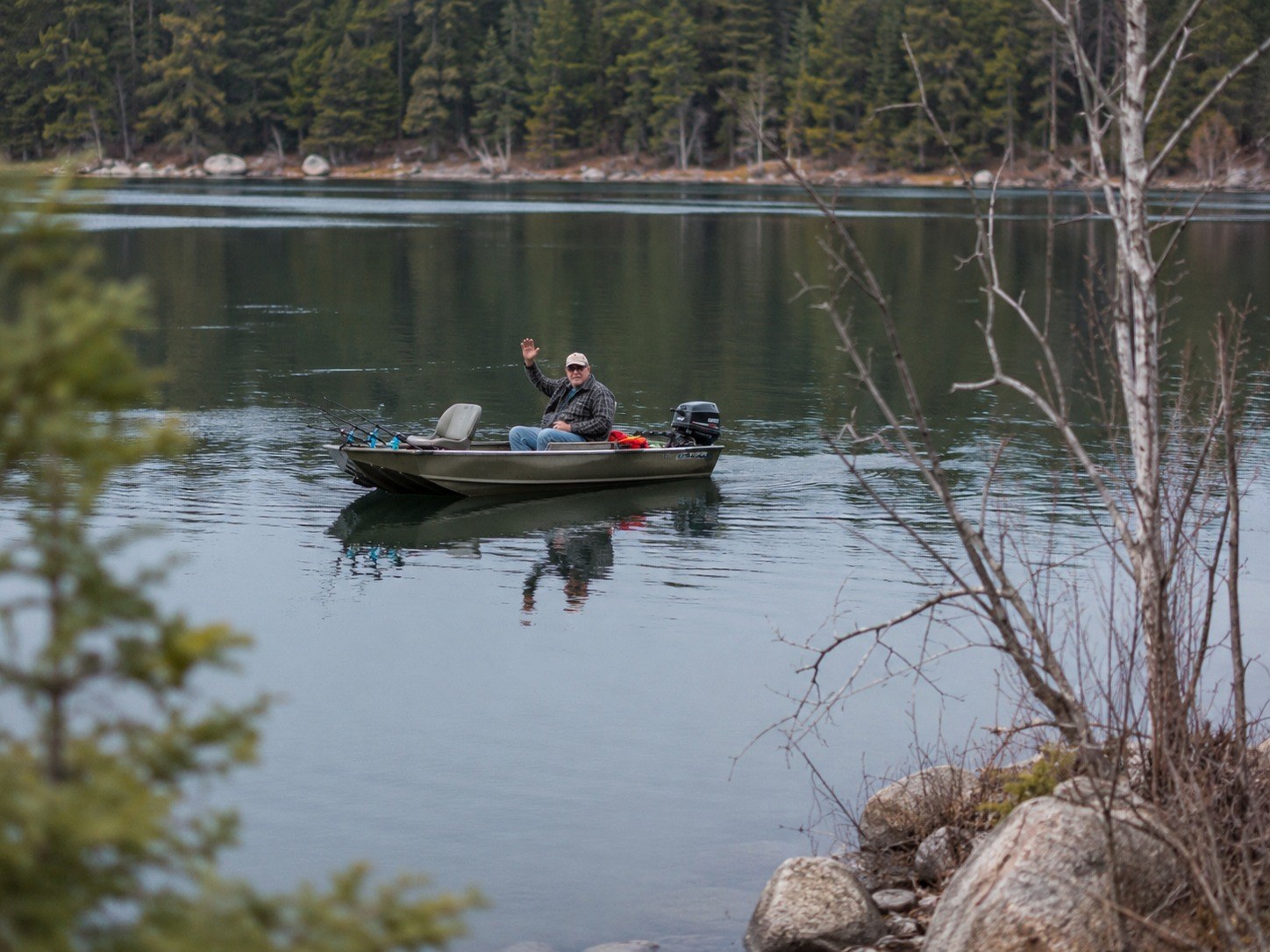
MISQUAH — It has come to my attention, as it does every year around the second week of June, that a great many people on this Chain of Lakes do not know how to wave from a boat. I write, as a public service and at no charge, to help.
First, the principle. The boat wave is not a greeting in the ordinary sense. It is an acknowledgment — a small, dignified recognition that you and another person are, at this moment, both out on the water, and that this is a fine thing to be. It does not invite conversation. It requires no response beyond its like. It is far nearer to a nod than to a hello.
The correct form is as follows. As you pass another boat, you lift the first two fingers of the hand already resting on the wheel or the tiller. You do not remove the hand. You lift the fingers, incline the head perhaps two degrees, and allow the eyebrows to do the rest of the work. The whole gesture should take under a second and ought to look, done properly, very nearly involuntary.
What you do not do — and here I must be plain — is raise the entire arm. The full-arm wave, the kind a person uses to flag down a bus, announces to the whole lake that you are from somewhere else and would like to be noticed. We have noticed. That is the very difficulty.
There are finer points. The wave is owed to every boat you pass without exception, including the fellow you had words with at the landing. It is owed to every dock with a person standing on it and to most docks with a person sitting on one, depending on the angle. It is not, by long regional custom, owed to jet skis, though a curt version may be extended to a child operating one under supervision.
Some hold that the wave is owed to the loons as well. On this I am of two minds. The loons do not wave back, have never waved back, and give every sign of considering the practice beneath them. But there is no harm in it. And on a still evening, with the light going gold on Big Pelican and a loon riding the wake of your pontoon as though it holds the deed to the lake — which, in every sense that matters, it does — a person could do a good deal worse than lift two fingers to it.
Summer is long. There is time to learn. Practice in the driveway if you must; I have seen it done, and thought no less of the man. But learn it. The lake is watching, and the lake keeps a long account.